
Let's listen to learn, not to react
The psychology of selective hearing and its impact on collaboration

Human communication is one of the most complex and consequential activities we engage in. We spend the majority of our waking hours in some form of conversation (speaking, writing, reading, watching, and listening). Yet despite this constant immersion in the exchange of information and ideas, genuine understanding between people remains surprisingly rare. At the heart of this paradox lies a distinction that is deceptively simple in its articulation but profoundly difficult to live out: listening to react (or respond) versus listening to learn.
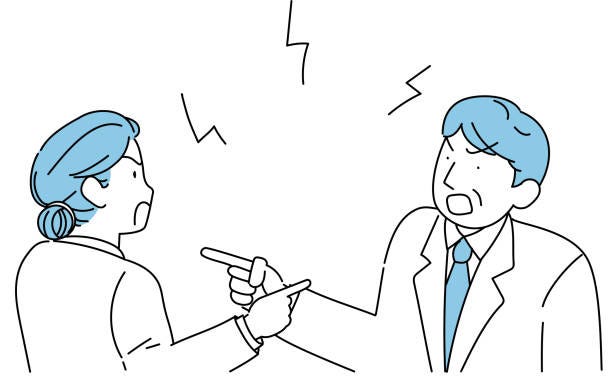
It is something that we see all the time in our politics. The person being brought in to testify skirts the questions so as to voice a talking point. The supports of a political party speaking over each other without ever hearing what the other person has to offer.
It is something we unfortunately see in our healthcare system. The doctor ignoring the complaints of an overfat patient, fixating on weight loss as the cure-all.
When we listen to react, we are not truly listening at all. We are waiting. We are scanning for openings, cataloguing ammunition, rehearsing rebuttals, and constructing the architecture of our next statement even as the other person’s words are still vibrating in the air. When we listen to learn, we do something far more demanding: we subordinate our ego, suspend our certainty, and open ourselves to the genuinely unsettling possibility that our current understanding may be incomplete, biased, or wrong.
But what are the psychological mechanisms that make reactive listening a default for many of us? Is it just egoism at play or is there something else? Why is learning-oriented listening so difficult to sustain? More critically how do these distinct patterns of behavior play out when we have to collaborate with others, where the stakes of not truly hearing one another are felt most acutely? Understanding the psychological underpinning offers a practical framework for individuals and teams who wish to counter reactive listening and can help to build a culture of genuine intellectual exchange.
The psychology of the reactive listener.
To understand why so many people listen to react rather than to learn, we must begin in the brain and how we become aware of information. Cognition and memory do not come about because our brain is a neutral, frictionless recording device. Awareness occurs because we form an emotional response to the information. Response that allows the brain to predict what should be, generating hypotheses about the world and filtering incoming information through those hypotheses. Something, from a survival standpoint, has never been about accuracy but speed. It’s ability to interpret to ambiguous information from the environment, a rustle in the bushes, and respond before any analysis could be completed has been the difference between life and death.

This legacy impacts our psyche; shaping how we process, interpret, and respond to someone speaking. Long before a conversation partner has finished their sentence, the brain is already predicting where that sentence is going, constructing a response, and evaluating whether the incoming information confirms or threatens existing beliefs. Neuroscientific research has demonstrated that the brain processes language at a speed that dramatically outpaces our ability to speak. The average person speaks at roughly 120 to 180 words per minute, but the brain can process spoken language at rates approaching 400 words per minute. This gap is the space in which reactive listening takes root. Where instead of processing what is being delivered and analyzing it relative to what we know, think we know, or have no clue about, we fill in the cognitive gap with internal commentary, anticipatory rebuttals, and self-referential thinking.
The result is a form of listening that functions to filter information rather than to take in what is actually being said. We hear enough to understand the topic, enough to detect threat or agreement, and enough to frame our response. But we do not hear in full. We do not follow the context of the message. The subtleties of argument, register the emotional undercurrents, or allow oneself to be genuinely surprised by what is being said.
For some, these cognitive responses stem from a need to preserve the sense of self, their Id, in the face of the threat that new information presents. This means that along with the biological underpinnings of neural responses we also have to deal with the social sense of preserving one’s ego to the perceived threat of new information. Ego protection, coming from the stimulated Id, is perhaps the most powerful driver of reactive listening. The need to maintain our deeply held sense of who we are, what we know, and what we stand for does not merely a psychological convenience. It is the organizing framework through which we interpret the experience of the conversation we are having. When incoming information threatens that framework, the mind does not process the threat neutrally. It mobilizes defenses.

Defenses that can be mobilized to reflect cognitive dissonance to new information, especially if it conflicts with an existing belief. We attempt to change the experiences of psychological discomfort not necessarily by updating the belief, but by discrediting the source, reinterpreting the evidence, or simply refusing to engage with the threatening content in full. Thus, listening to react is, a preemptive form of cognitive dissonance management. By framing the listening experience as a debate to be won rather than an inquiry to be pursued, we shield ourselves from the discomfort of having to truly consider that the other person might be right.
A response that becomes more pronounced when we intertwine our identity with our position. When someone’s professional expertise, political affiliation, cultural background, or personal history is connected to a particular worldview, a challenge to that worldview is experienced not merely as a factual dispute but as an existential one. The person does not feel that their argument is being questioned, they feel that they are being questioned. The criticism is not about what is being stated but is a criticism of the person.
The instinct to defend the self is far more powerful than the instinct to learn. A defense that leads to only hearing what we expect to be told...to express confirmation bias in real-time. Confirmation bias, or the tendency to seek, interpret, favor, and recall information in a way that confirms or supports one’s prior beliefs, is one of the most robustly documented phenomena in all of cognitive psychology. It operates with particular force in the domain of listening. When we enter a conversation with established views, we do not listen to the totality of what is being said. We listen selectively, amplifying the parts that confirm our existing beliefs and minimizing or dismissing the parts that contradict them.
This selective amplification happens largely without conscious awareness. We are not, in most cases, deliberately choosing to distort what we hear. The distortion happens automatically, typically occurs unconsciously, allowing for only us getting a filtered version of the message to reach our awareness. This is why two people can hear the exact same conversation and walk away with dramatically different accounts of what was said. Each person heard a version of reality shaped by their expectations, and each version felt entirely accurate. For the reactive listener, confirmation bias functions as both a cause for reaction but also as a reinforcement to justify the reaction. We listen reactively because we expect not to learn anything new and because we listen reactively, we hear nothing new, which confirms the expectation.
The social contract and the reactive listener
Not only are reactive listeners responding to confirm what is already believed to be true but are also working out of self-preservation and not wanting to look ignorant, ill-informed, or uninformed. Acting so as to preserve their social status or hierarchy in the group. This is where the physicians inability to see past what they think to be true about a patient rears its ugly head. The politician, or political appointee, not willing to concede that a different idea or opinion might be valid snakes its way into public discourse. The expert not wanting to look less of expert falling back to the logical fallacy of appeal to authority. The social dimension of reactive listening is equally powerful. Conversations, especially in professional and intellectual contexts, are rarely free of status dynamics. We are acutely aware of how we are perceived by others, and we know, consciously or not, that appearing knowledgeable, confident, and certain carries social rewards, while appearing uncertain, confused, or in need of instruction carries social costs.
Listening to learn requires a willingness to be vulnerable. To accept and acknowledge not-knowing, asking clarifying questions, wrestling with ambiguity rather than rushing to a conclusion. It requires presenting intellectual humility, or at least performing a kind of intellectual humility, that many people cannot do. It requires us experience exposure, a vulnerability to the judgment of others, in environments where status is at stake. Thus, many people would rather give the appearance of understanding than actually seek it. They listen reactively not because they are arrogant, but because they are afraid. A fear which is particularly potent in hierarchical settings. For a subordinate, asking a genuine learning question can feel like announcing inadequacy. For a leader, the same question might feel like an admission of ignorance that undermines their authority. Both parties, for different reasons rooted in status anxiety, default to reactive listening. Each performing as if they comprehend each other, rather than pursuing it.
The emotional charge of listening to other
When conversations become emotionally charged, as it does when we feel criticized, dismissed, disrespected, or threatened, our capacity for learning-oriented listening collapses almost entirely. The neuropsychology of emotional arousal leads to a self-imposed state of “fight or flight,” responses that within our brain makes use attend to everything but narrows our attentional focus. We accelerate reactive thinking (e.g., biases and heuristics) and reduce cognitive processes that support nuanced reasoning and genuine inquiry. The stress response itself activates pathways in out brain that actually diminishes our cognitive capacity for integrative thinking.
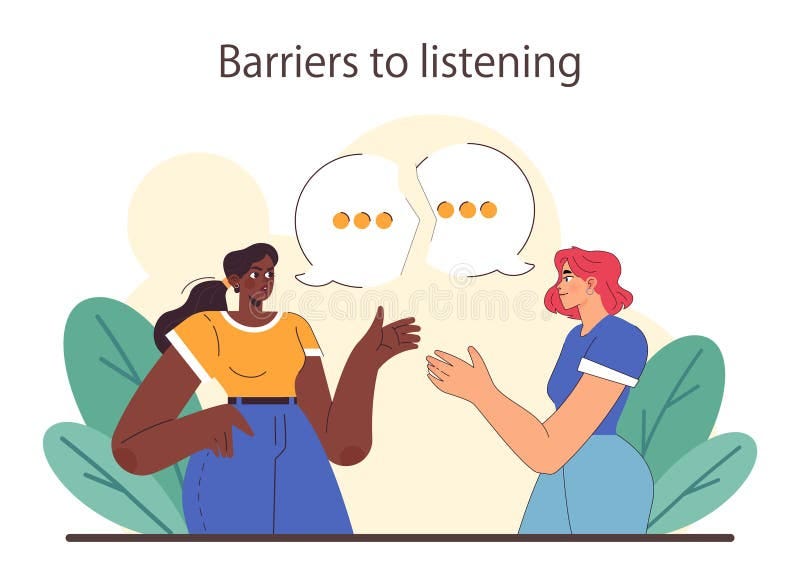
We become reactive to almost everything and can no longer exhibit the slow, careful, perspective-taking orientation to information that characterizes genuine listening to learn. We hear words as attacks. Experience pauses as aggression. Frame the conversation as a conflict to be survived rather than an exchange to be engaged. The tragedy of this hijacking of our brain by our “fight or flight” mechanisms is that by making the conversation emotionally triggering, the moments when we are most in need of genuine connection and understanding (e.g., the moments of conflict, disagreement, and high stakes) are precisely the moments when our capacity for that connection become severely impaired.
This emotional response can unfortunately become habitual. People that constantly feel that they must defend themselves, their choices, or feel marginalized may become reactive listeners out of habit. A habit that has been reinforced through thousands of repetitions over a lifetime. From the earliest years of schooling, many educational systems reward the appearance of knowing over the process of inquiry. Students learn to compete for airtime, to demonstrate knowledge, and to defend answers rather than explore questions. Competitive academic and professional environments reinforce these patterns: the person with the confident, immediate response is rewarded; the person who sits quietly processing is often overlooked or passed by. Over time, reactive listening is not a choice consciously being made, it is the default mode. It is a behavior that has been trained by years of social and institutional feedback.
Changing it requires not just intellectual intention but active behavioral reprogramming, because habits of attention and response are among the most persistent and automatic of all behavioral patterns. Yet, it is important to note that the psychology of listening is not culturally uniform. Different cultures hold different norms around conversational turn-taking, silence, assertion, and deference. In some cultural contexts, speaking quickly and confidently over others is a sign of engagement and enthusiasm. In others, thoughtful silence after a statement is a mark of respect. Cross-cultural conversations are particularly vulnerable to reactive listening failures, because the participants may not share the same interpretive framework for even basic conversational cues. At the same time, gender dynamics also intersect with listening patterns in complex ways. Sociological research on conversation has documented persistent differences in how people of different genders are perceived when they ask questions, express uncertainty, or acknowledge not knowing something. These perception gaps contribute to the unequal social costs of listening to learn across different social identities, creating environments where some people have structural reasons to default to reactive listening that others do not.
At the deepest level, reactive listening often stems from a fundamental asymmetry in human emotional need. We want to be understood. We want our experiences validated, our perspectives acknowledged, our contributions recognized. The desire to be heard is not a weakness or a vanity, it is a core human need, as foundational as the need for safety or belonging. But the desire to be understood creates a paradox in conversation: if both parties are primarily focused on being understood, neither will truly listen to understand the other. Both will be speaking, in a sense, into a mirror (seeking reflection rather than revelation). The result is a kind of mutual performance of listening, in which the external form of dialogue is maintained but it’s essential function is absent. There is genuinely no exchange of perspectives.
Breaking this loop requires someone to move first. Someone has to subordinate the need to be understood long enough to actually understand. And for most people, this is genuinely a difficult and often emotionally costly act. One that is made even harder by the fact that it is rarely recognized or authentically rewarded in the moment by the other person in the conversation.
Resistance to teamwork, the reactive listeners impact on the collaborative space
Working together either collaborating in the workplace or holistically between practitioner and patient in an effort to improve one’s overall health, is fundamentally an act of collective intelligence. It is the attempt to produce something (i.e., a decision, a solution, a creative work, a plan of action) that no individual could have produced alone. It is a potential only realized when the participants authentically integrate their different perspectives, knowledge bases, and modes of reasoning into something larger than the sum of its parts.
Reactive listeners are corrosive to this process. They overtly prevent the full transmission of information. If team members are listening primarily to frame their own responses rather than to absorb what is being shared, critical details, nuanced caveats, and minority perspectives will be lost. Decisions will be made on incomplete information that everyone in the room technically heard but no one actually perceived. Implicitly, reactive listening sends a social signal that is deeply damaging to collaborative culture by conveying that the speaker is not truly valued. When people feel that they are not genuinely listened to, they disengage. They stop sharing the tentative, early-stage, vulnerable ideas that are often the most generative. They stop naming the problems they see but are unsure about. They stop asking the naive questions that might expose unexamined assumptions. They begin to perform their participation rather than genuinely contributing it. Saying only what is expected. Agreeing with whoever has the most social power in the room. But reserving their real thinking for the conversations that happen after the meeting ends.
Actions that lead to dysfunction as collaboration is eroded by the act of what can be attributed as pseudo-listening. In an environment where collaboration is an expectation, reactive listening often manifests with the appearance of attentiveness without its substance. Characterized by the person nodding, showing appropriate facial expressions, and even making verbal acknowledgments of what others are saying, all while internally rehearsing one’s own contribution or evaluating the conversation through a fixed framework of existing belief. It is the performance of listening, socially compliant to the collaborative task, but are cognitively absent from collaboration.
The consequences pseudo-listening to a collaborative team are substantial. Meetings become rituals of position-presentation rather than arenas of genuine inquiry. Brainstorming sessions produce ideas that merely recombine existing thinking rather than generating genuine novelty. Conflict is driven underground rather than resolved, because pseudo-listening prevents the kind of genuine engagement with opposing perspectives that actual resolution requires. Decision-making processes become dominated by whoever speaks most confidently or most loudly, because no one is truly evaluating the content of what is being said. The decision is made not based on what is best but due to its social packaging within the collaborative team.

Reactive listening hidden in the actions of pseudo-listening is self-perpetuating within teams. When team members learn, through experience, that their ideas are not genuinely considered. That what they have to offer is met with immediate counter-arguments, “polite” deflection, or is simple disregarded, they stop contributing substantively. When genuine contribution drops, the quality of the collective output declines, which increases stress and frustration, which increases the defensive actions of the reactive listener. Actions which further suppresses genuine contribution in a downward spiral that is difficult to arrest once it is set in motion.
Actions that are further reinforced when there is a hierarchy (whether externally or internally perceived) being imposed into to the collaborative effort. A sense that one person is an expert authority and the other a naïve learner, one is an elder while the other newcomer. Hierarchy has a systemic effect on the reactive listener, especially if they perceive themselves as the elder, the expert, the authority and the others as being naïve or ill-informed. When there is a hierarchical organization, reactive listening from the leadership level has cascading effects that extend throughout the system. When leaders listen primarily to react (i.e,. to defend their existing strategies, to maintain the appearance of certainty, to signal confidence in already-made decisions) they create an environment in which the information they most need is precisely the information least likely to reach them. Or least likely to actually be received.
This is a phenomenon, the Yes-person problem, causes the structural suppression of dissent. In each formulation, the core dynamic is the same: leaders who listen reactively, whose body language, responses, and patterns of attention communicate that challenge and complexity are unwelcome, find themselves increasingly surrounded by information that confirms what they already believe. The people below them learn to provide that information, not because they are dishonest, but because they are rational: they have observed that reactive listening from leadership means that alternative information is not truly heard anyway, while agreement is rewarded and disagreement becomes costly.
The result is a catastrophic failure of organizational learning. The feedback loops that should connect ground-level reality to executive decision-making are severed. Organizations move confidently toward outcomes that listening to learn leaders would have identified as problematic long before the point of crisis. Crisis that appear not because of lack of awareness or shared knowledge, but because the team does not work from a perspective of having psychological safety in the collective. Everyone must agree with the leader because they lack the shared belief within a team that it is safe to take interpersonal risks, to speak up, to disagree, and to be wrong without fear of punishment or humiliation. Psychological safety has been established as having a foundational role in team performance, learning, and innovation. High-performing teams are distinguished not by the individual talents of their members but by the degree to which every member feels genuinely safe to contribute.
Reactive listeners destroy psychological safety. When team members experience their contributions being met with immediate challenge, dismissal, or the thinly veiled impatience of someone who has already formulated their response, the message received is clear: this is not a safe space to share uncertain or divergent thinking. The rational adaptation is to self-censor, to wait for consensus before speaking, and to reserve the contributions that might be interpreted by the reactive listener as controversial for safer settings. Even when these contributions offer great value to the group.
The relationship between reactive listening and psychological safety is bidirectional. Low psychological safety triggers reactive listening. People feel threatened, become defensive and a reactive listener. Reactive listening erodes psychological safety and when people’s contributions are not genuinely received, they feel less safe to contribute. Breaking this cycle requires deliberate, sustained intervention simultaneously at the level of individual behavior causing the erosion and throughout team culture.
Interventions that can only occur when team members are encouraged to listen across differences.Some of the most challenging and most necessary forms of collaboration today occur across the boundaries of professional discipline, cultural background, and cognitive style. Cross-functional teams (those composed of engineers and designers, clinicians and administrators, data scientists and policy makers) must regularly bridge not just different bodies of knowledge but genuinely different epistemologies: different assumptions about what counts as evidence, what kinds of reasoning are valid, and what the problem even is. In these contexts, reactive listening is particularly devastating because it short-circuits the translation process that genuine cross-functional collaboration requires. Truly understanding what is being communicated requires being patient and taking on a learning-oriented listening process, having the willingness to say “I’m not familiar with the way you’re thinking about this. Help me understand,” even at the risk of appearing naïve. Reactive listening on the other hand, typically takes the form of rapid translation into familiar frameworks. They are hearing each other, but only through the lens of their own discipline, and the result is not collaboration but the co-existence of parallel monologues. A dynamic that often leads to collaborative resistance and push-back.
Beyond the failures of listening that result from habit, Id and ego protection, or cognitive bias, the collaborative setting generates a specific and particularly challenging form of reactive listening: deliberate resistance. This is listening that is oriented not merely toward reacting but toward opposing by the active mobilization of counter-arguments, skepticism, and challenges as the primary relational posture. Resistance in collaborative settings arises from many sources. Some resistance is substantive: it reflects genuine disagreement, real concerns about quality or direction, and the healthy skepticism that good collaboration requires.
Yet, much of the resistance that is seen from the reactive listener is psychological and social in character. It is the resistance of people who feel that their expertise is not being respected, whose historical contributions have not been acknowledged, who distrust the motives of those bringing new ideas, who are protecting professional turf, or who have learned through experience that enthusiasm for change is often a prelude to being made responsible for implementing it without adequate support. Understanding the reason for resistance (either substantive or psychological) is crucial for anyone trying to build genuinely collaborative relationships. Addressing substantive resistance tends to be a straightforward process: give a better argument with clearer evidence and be more responsive in adapting the work to legitimate concerns be raised. Yet, addressing psychological resistance requires something altogether different. It requires attending to the relational and emotional dimensions of the situation. Something that the reactive listener cannot, or chooses not to, do. Yet, it is something that by its nature listening to learn is uniquely positioned to accomplish.
Listening to learn: countering the resistance of the reactive listener
To counter the reactive listening pattern, we must start with self-awareness and recognize our own reactive patterns to hearing others. This first and most fundamental step to countering reactive listening is metacognitive and requires us developing genuine awareness of our own reactive patterns. It sounds straightforward but is genuinely difficult. Because reactive listening happens largely unconsciously, we do not experience ourselves as failing to listen; we experience the other person as unclear, repetitive, threatening, or wrong. Just as we do to limit the impact of other biases, we have to enter into conversations and collaborations admitting that we will listen to react. Only with this admission can we open ourselves to developing this awareness. An awareness that requires a practice of deliberate self-observation during conversations, noticing when the internal monologue begins to overtake the incoming signal. Understanding our non-verbal cues, such as when the body tightens in preparation for a counter-argument, or when impatience begins to filter what is being said to what is being heard.
Taking a mindful approach to listening. Many practitioners of mindfulness-based approaches to communication describe this as catching the moment of reactivity, the brief window between stimulus and response in which conscious choice becomes available. It is also worth examining the patterns of one’s reactive listening:
What topics reliably trigger it?
What kinds of speakers cause me to be reactive?
What emotional conditions and social contexts are my triggers?
The answers reveal the specific contours of one’s defensive architecture and point toward the most productive targets for growth. A person who listens reactively when their professional expertise is questioned has different developmental work to do than someone who becomes reactive in the presence of hierarchical authority or in conversations about cultural and social identity.
Understanding the architecture of your reactive listening allows one to build a practice of suspending response. This is the most practically immediate intervention for stopping reactive listening, to deliberate create a temporal gap between the end of another person’s speaking and the beginning of one’s own. This brief gap, as short as two or three seconds in spoken conversation, serves multiple functions simultaneously.
Physiologically, it interrupts the activation of the “fight or flight” response to the perceived stress. This interruption allows prefrontal processing to come back and allows for regulation of emotional response and attention to appropriate details that allow for analysis of what is being said. The pause will cognitively create space for the integration of what was actually said rather than what was expected. Relationally, it signals to the speaker that what they said is being genuinely considered rather than automatically processed. For most people in Western conversational cultures, a two-second pause feels uncomfortably long. We are trained to treat silence as a conversational emergency requiring immediate filling. But this discomfort is itself instructive: it points to the degree to which our conversational habits have foreclosed the possibility of genuine reflection between incoming and outgoing communication. Sitting with the discomfort of the pause, practicing it first in low-stakes conversations and gradually introducing it into higher-stakes ones, is one of the most immediately impactful practices available.
Along with deliberating creating a gap between hearing and responding, listening to learn means deploying clarifying questions to display genuine inquiry. The clarifying question is one of the most underused and most powerful instruments in the toolkit of genuine listening. Not the rhetorical question, which is a statement disguised as an interrogative. Not the challenging question, which frames the speaker’s position in its most vulnerable form. But the genuine clarifying question. The question asked because the listener does not fully understand and truly wants to. Asking genuine clarifying questions does several things simultaneously. It forces the listener to identify specifically what they do not understand, which requires paying closer attention than reactive listening demands. It signals to the speaker that their communication is being genuinely engaged with, which typically increases their willingness to elaborate and reveal more. And it slows the conversational pace to a speed at which real information exchange can occur.
In collaborative and professional settings, those who habitually ask genuine clarifying questions, before responding or deciding to create conversational norms, profoundly shift the culture of their teams. When clarifying questions are modeled by those with status and authority, they communicate that not-knowing is safe, that complexity is welcome, and that the team’s goal is understanding rather than performance. But more importantly, the demonstrate the separation between understanding versus agreeing.
One of the most common and most damaging confusions in reactive listening is the conflation of understanding with agreement. Many people resist listening to a position carefully because they fear that genuinely engaging with it implies endorsing it, especially if they allow themselves to truly understand the other person’s perspective. The reactive listener will take the position that because they understood the message they will somehow be obligated to adopt it or will appear to have adopted it in the eyes of others. This conflation is worth explicitly naming and challenging, both in oneself and in collaborative contexts. Understanding what someone believes and why they believe it is not the same as agreeing with them. It is not even a step toward agreeing with them, necessarily. It is the prerequisite for any intelligent response (whether that response is agreement, disagreement, or the more common outcome of genuine inquiry), which is a more nuanced and adequately complex position than either party held at the outset.
One practical technique for separating understanding from agreement is the practice of steel-manning: attempting to construct the strongest possible version of a position one disagrees with before responding to it. This is the opposite of the straw-man approach, which reactive listeners naturally default to, selecting the weakest, most easily rebutted version of an opposing view. Steel-manning requires genuine intellectual effort and genuine listening, and it consistently produces better thinking and more productive dialogue than its reactive alternative.
Still, we must address the emotional undercurrents that form the rationales given for resistance. When resistance in collaborative settings is psychological rather than substantive. That is, they are rooted in feelings of disrespect, distrust, or fear, then responding at the level of content is almost always ineffective. Bringing better evidence to a conversation with someone who feels their expertise is being dismissed does not address what is actually driving the resistance. It often escalates it, because the person experiences the evidence as an additional pressure that confirms their original feeling of not being heard. As such, addressing psychological resistance requires first acknowledging the emotional dimension, not as a strategic move designed to soften the person up for the eventual argument, but as a genuine act of recognition. This means listening to what the resistance is expressing at the level of feeling and need, not just at the level of stated objection. It means asking questions like “What concerns you most about [topic]?” and “What would need to be true for this to feel workable to you?” But more importantly, genuinely listening to the answers.
Those listening to respond will see this a weakness or a capitulation. Yet, this kind of emotionally attuned listening is not soft or demonstrating any sense of weakness. It is, in fact, one of the most strategically effective approaches to overcome collaborative resistance, when it exists. When people feel genuinely heard, when their concerns are acknowledged and their expertise is visibly incorporated into the collaborative process, the psychological grip of resistance loosens. Not always immediately. Not always completely. But consistently and reliably demonstrating emotionally attenuated listening will allow the energy that was going into defense becomes available for genuine engagement. Thereby building a culture of listening within the team.
Changes that begin with the individual but individual behavior changes, while necessary, is not sufficient for transforming the collaborative listening environment of a team or organization. Listening patterns are as much a feature of culture and structure as they are of individual psychology and changing them requires intervention at both levels simultaneously.
At the structural level, this means examining the formats and norms of collaboration to identify where those listening to react are structurally incentivized. Meeting formats that reward the fastest, most confident response rather than the most thoughtful one will produce reactive listening regardless of individual intentions. Decision-making processes that give disproportionate weight to whoever speaks last or loudest will produce reactive listening. Performance evaluation systems that treat the expression of uncertainty as a weakness will produce reactive listening. The alternative structures worth considering include, but are not limited to:
pre-read practices that give all participants time to absorb information before the meeting in which it will be discussed
structured turn-taking protocols that ensure every voice in the room is heard before anyone responds
deliberate ‘listening rounds’ in which participants are asked to reflect back what they heard before offering their own view
after-action review processes that explicitly reward the identification of what was misunderstood or not heard.
Shifting from reactive to learning-oriented listening requires the visible modeling of that behavior by those with the greatest social influence in the team. When leaders pause before responding, when they ask genuine clarifying questions, when they visibly update their positions in response to new information, and when they name and celebrate the moments when listening led to better outcomes than their original thinking would have produced, they make learning-oriented listening a valued and legitimate mode of engagement. Behavior, in teams, follows visibility. What is modeled by those who matter is what becomes normal.
For the individual committed to developing genuine listening-to-learn capacity, several practices are worth sustained engagement.
The first is a daily reflection practice focused on one’s listening in significant conversations: What was I hearing? What was I missing? At what points did I begin formulating my response before the other person had finished? What triggered that shift? This kind of reflective journaling, maintained consistently over weeks and months, reveals patterns that are invisible in the moment and generates the self-knowledge necessary for real change.
The second is the deliberate cultivation of curiosity as a conversational orientation. Curiosity is not a personality trait that people either have or lack, it is a stance that can be intentionally adopted. Before entering conversations, one can ask: What might I learn from this person that I don’t currently know? What assumptions of mine might they challenge? What would surprise me, and what would that surprise reveal? These questions prime a different mode of attention than the default one.
The third is the practice of explicitly naming one’s own listening shifts when they happen. Saying out loud, in the conversation, “I want to make sure I understand what you’re saying before I respond” or “I think I may have been reacting to what I expected you to say rather than what you actually said; can you say that again?” This kind of meta-communicative transparency not only improves one’s own listening in the moment but models listening-to-learn for others and creates the relational conditions in which genuine exchange becomes possible.
Ultimately, the shift from reactive to learning-oriented listening is not a technique to be applied only in difficult conversations. It is a fundamental reorientation of one’s relationship to uncertainty, other people, and the limits of one’s own knowledge. It is, at its deepest level, an act of epistemic and intellectual humility. This reorientation is particularly consequential for those in leadership roles, because the capacity for genuine listening is not merely a relational nicety but a core competency for effective leadership in complex environments. The leaders who have most demonstrably shaped the outcomes of their organizations and communities in the modern era are consistently those who cultivated environments in which the most accurate possible picture of reality could be assembled from the diverse perspectives of those closest to the work. This is only possible when those at the center listen to learn, enter exchanges not knowing exactly what they will come away with, and who are reliably surprised, enriched, and refined by what they hear. This is not naivety. It is the disciplined practice of treating every conversation as an opportunity for learning that might not come again.
Take-home Message
In an era defined by information overload, accelerating complexity, and deepening social polarization, the capacity to listen genuinely and actually hear what another person is saying, in full, without the distorting filter of anticipatory reaction, has become rare, while being even more needed. The psychological barriers to this kind of listening are formidable: they are rooted in neuropsychology, shaped by a lifetime of cultural training, reinforced by social incentive structures, and activated with particular force precisely in the high-stakes contexts where genuine listening matters most.
And yet the evidence is clear. Individuals and teams that listen to learn outperform those that listen to react. Leaders who listen to learn make better decisions and build more resilient organizations. Individuals who listen to learn grow more rapidly and build more generative relationships than those who do not. The benefits of genuine listening are not vague or philosophical. They are specific, measurable, and consequential. The path from reactive to learning-oriented listening is not short, and it is not primarily a matter of information or technique. It is a practice of sustained attention, deliberate habit formation, and genuine willingness to be changed by what one hears. It begins with the honest, humble, and potentially unsettling recognition that the way one has been listening may not be serving as well as it could. And from that recognition, with patience and persistence, something genuinely better becomes possible.
To listen to learn is to take the other person seriously as a source of truth about the world. It is, in this sense, a form of respect so fundamental that all other forms of respect flow from it. It is also, in the end, the only way that human beings have ever managed to think together—which is to say, it is the foundation of everything that makes collaboration possible, and everything that makes it worth doing.